Nazi Party
The Nazi Party, known in the novel as the Partei, is the totalitarian ruling organization of the German Reich, which, along with Japan, won World War II. In the alternate 1962 of the novel, the Party controls a vast empire stretching from Europe to the eastern United States, and its ideology and internal power struggles are the primary engines of the plot. The Party's influence permeates every aspect of life in the Pacific States of America, from the political maneuvering of Japanese officials to the daily anxieties of American citizens like Robert Childan and Frank Frink, who must navigate a world where the Nazis are the ultimate arbiters of power and racial hierarchy.
Ideology and Global Domination
The Nazi Party's ideology is characterized by a fanatical belief in racial purity and a drive for cosmic-scale conquest. The novel reveals the Party's obsession with abstract concepts like race, land, and honor, which its leaders treat as more real than individual human lives. This worldview is exemplified by the Party's actions in Africa, where it has nearly completed the "Final Solution of the African Problem," a genocide that has wiped out the continent's indigenous population. The Party's ambitions extend beyond Earth; it has colonized Mars and Venus, using advanced technology to project its power into the solar system. This expansionist drive is contrasted with the Japanese, who are bogged down in South America, highlighting the Nazi Party's technological and ideological superiority within the Axis alliance.
The Party's racial ideology is also enforced through the armband system and the Nuremberg Law, which have been adopted in the United States, leading to the expulsion of Jews from New York and the establishment of concentration camps. The novel's characters, such as the Italian truck driver Joe Cinnadella, who works for the Organization Todt, reveal how the Party's labor policies and economic programs have reshaped society, offering a twisted form of dignity to some while condemning others to extermination.
Internal Power Struggles and Succession Crisis
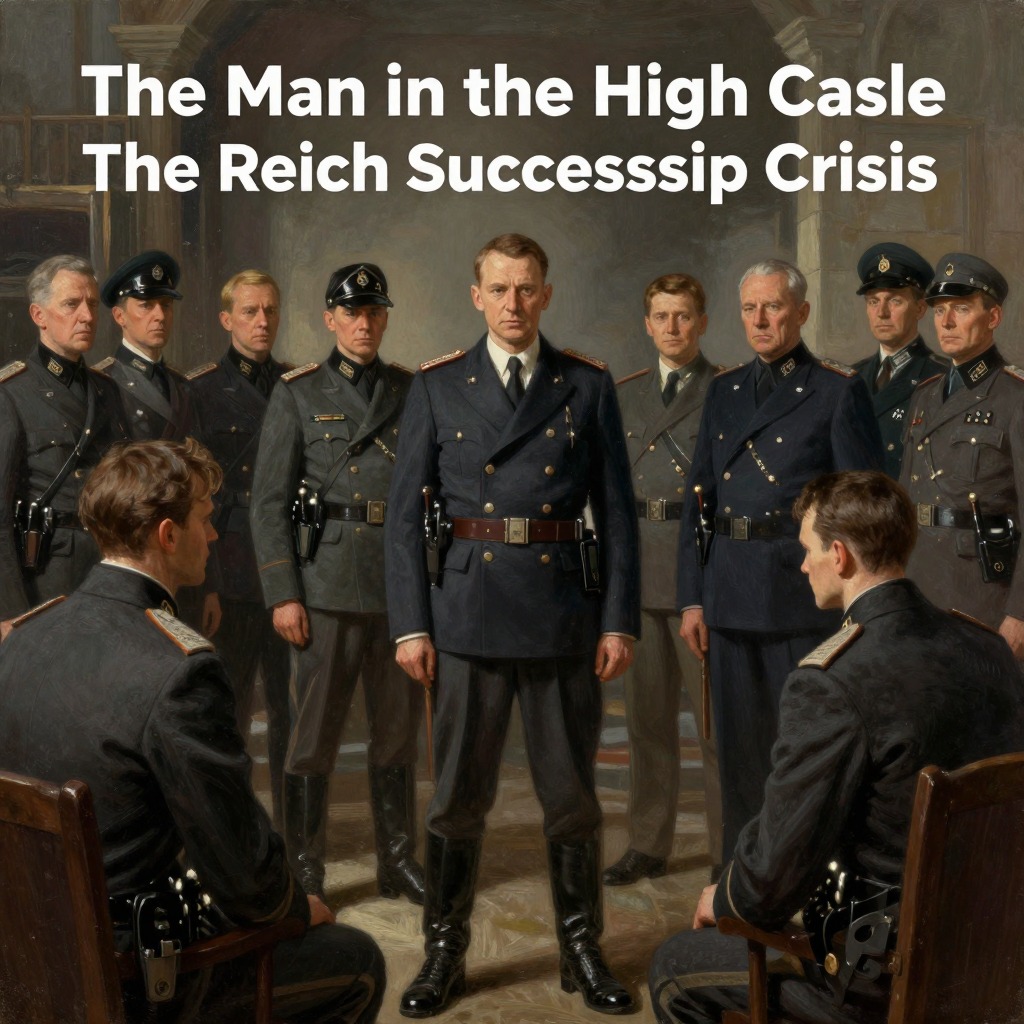
The death of Reichs Chancellor Martin Bormann triggers a major succession crisis that forms a central plotline of the novel. The Party is divided among several factions, each vying for control. The novel's characters discuss the leading candidates: Hermann Goring, the sybaritic former air ace; Joseph Goebbels, the brilliant and fanatical propagandist; Reinhard Heydrich, the feared and enigmatic head of the SD; and Baldur von Schirach, the idealistic former Hitler Youth leader. The Japanese Foreign Office provides a detailed analysis of these figures, evaluating their personalities and potential policies. This internal struggle is not merely political; it has life-or-death consequences for the world, as the faction that emerges will determine whether Operation Dandelion—a planned nuclear attack on Japan—will proceed.
The novel shows how the Party's internal rivalries extend to its overseas operations. In San Francisco, the local SD chief, Bruno Kreuz vom Meere, operates with a degree of autonomy, and his actions, such as the raid on the Nippon Times Building, are not always in line with Berlin's policies. The German Consul, Hugo Reiss, is caught between his duty to the Reich and his personal distaste for the SD, and he contemplates sabotaging their operations. This internal friction is a key weakness that the novel's protagonists, such as the Abwehr agent Rudolf Wegener, seek to exploit.
The Party's Role in the Plot
The Nazi Party's actions directly drive the novel's major events. The SD's attempt to assassinate or kidnap Wegener during his meeting with General Tedeki leads to a violent shootout in Mr. Tagomi's office, forcing the Japanese official to kill two SD agents. This event has a profound psychological impact on Tagomi, contributing to his spiritual crisis and eventual heart attack. The Party's ban on The Grasshopper Lies Heavy, a novel that imagines an Allied victory, makes the book a dangerous and sought-after object, and its author, Hawthorne Abendsen, is a target for assassination. The Party's racial laws lead to the arrest of Frank Frink, a Jew, who is saved from extradition to Germany only by Tagomi's intervention. The Party's ideology also shapes the personal relationships and prejudices of characters like Robert Childan, who internalizes Nazi racial theories even as he resents Japanese rule.
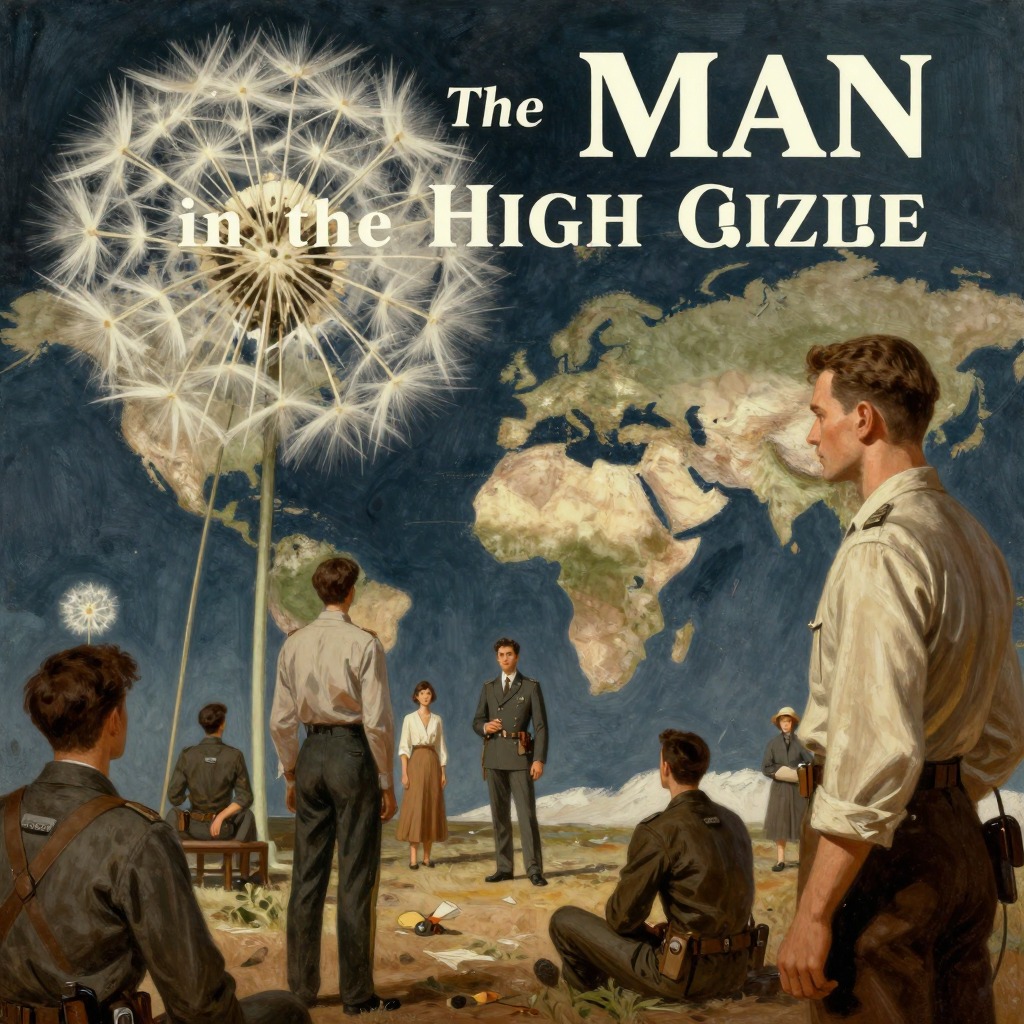
The Party's ultimate goal, Operation Dandelion, is the novel's central geopolitical threat. Wegener reveals that the Party plans to launch a surprise nuclear attack on the Japanese Home Islands, wiping out the Imperial family and the nation's military and industrial capacity. This plan is supported by the new Chancellor, Goebbels, and opposed by Heydrich's faction, which has been given control of the space program. The novel's climax hinges on whether the Japanese can use this information to intervene in German politics and prevent the attack, a choice that forces them to consider supporting the even more evil SD faction as a lesser evil.
The Party's Legacy and Significance
The Nazi Party in The Man in the High Castle is depicted as a force of pure, unadulterated evil, yet it is also shown to be a complex and self-destructive organization. Its leaders are not monolithic; they are driven by personal ambition, ideological fervor, and a nihilistic desire for power. The Party's internal conflicts, its genocidal policies, and its reckless pursuit of cosmic domination are all presented as symptoms of a deeper madness, a psychosis that infects the entire German nation. The novel suggests that the Party's ultimate victory would be a sterile, lifeless one, as its leaders are more interested in the abstract concepts of race and honor than in the actual lives of people. The Party's legacy is one of destruction and despair, and its presence looms over the novel as a constant reminder of the fragility of civilization and the dangers of unchecked ideology.